
User Centered Design of
AI-Driven Virtual
Financial Assistant
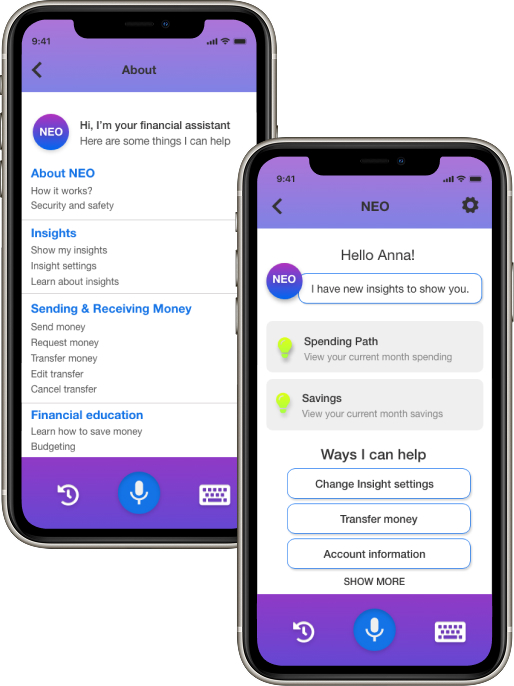
In today’s fast-evolving digital banking landscape, where personalised digital experiences define user satisfaction, this research project explored the user-centred design of an AI-driven Conversational Virtual Assistant (CVA) for mobile banking.
Through a mixed-methods approach, this research addressed critical gaps in current solutions by focusing on how CVAs can adapt to users’ personalities, preferences, cultural backgrounds, and contexts to deliver more engaging, trustworthy, and effective financial support.
Role
UX Researcher UX Designer
Deliverables
Research paper, Prototype
Tools
Adobe XD, Miro, Notion, Google docs, PowerPoint
Time span
10 weeks
Literature Review
The rise of intelligent Conversational AI has transformed how people interact with technology. Powered by breakthroughs in Deep Learning, Big Data, and Natural Language Processing (NLP), assistants such as Amazon Alexa, Apple’s Siri, and Google Assistant have achieved remarkable mainstream success. This progress has sparked growing interest in applying conversational technologies across various sectors, particularly in financial services. Conversational User Interfaces (CUI) are increasingly regarded as a promising pathway toward more natural and accessible human-computer interaction, with some researchers speculating that they could become the dominant universal user interface in the near future.
In the mobile banking sector, which has become the preferred channel for financial services, Conversational Virtual Assistants (CVAs) offer substantial benefits. Powered by AI, Speech Recognition, and NLP, tools like Erica (Bank of America), Eno (Capital One), and others deliver personalised insights, transaction support, account information, and 24/7 assistance. These assistants enhance convenience while enabling banks to reduce operational costs and improve customer engagement. However, many current implementations remain generic and lack sufficient personalisation.
A growing body of research emphasises that customisation and personalisation — particularly of personality, voice, language, and interaction style — significantly boost user satisfaction, emotional connection, trust, and adoption of CVAs. Despite this evidence, banking CVAs often rely on fixed, predefined settings with limited customisation options. This gap underscores the need for user-centred research to better understand diverse user needs and preferences, paving the way for more tailored and effective CVA design in mobile banking.
The Problem
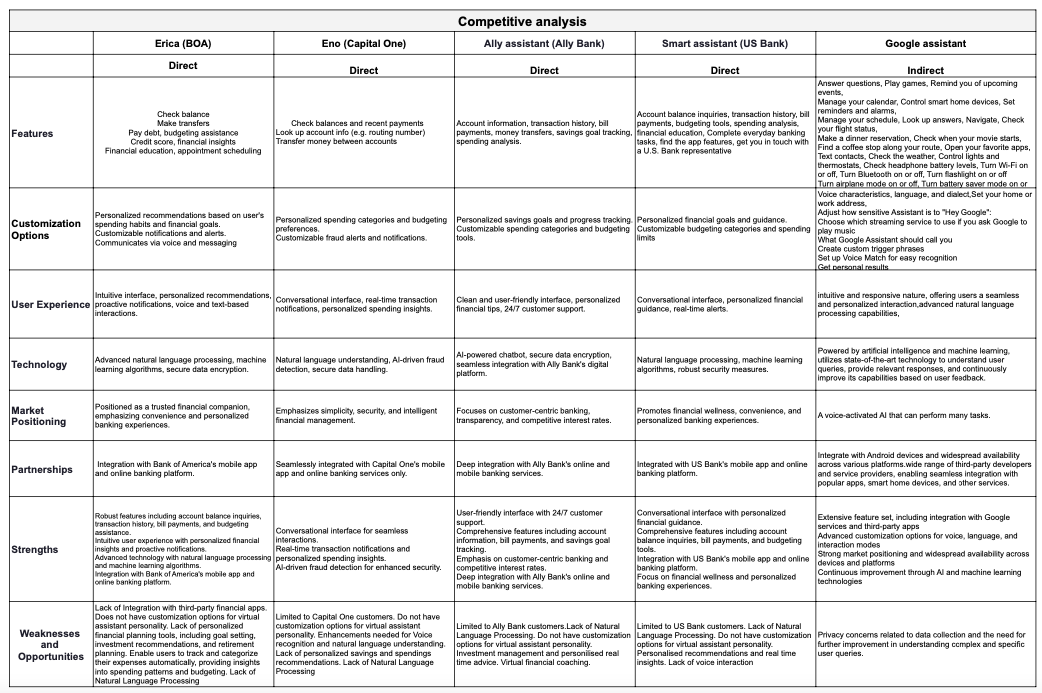
Literature review and market analysis revealed that mobile banking apps mostly come with predefined CVA settings without customization options, which often leads to a dissatisfied user experience
Research Question
How can the CVAs in mobile banking be designed to create a more personalised and convenient user experience?
Research Methodology
Following the User- Centered Design approach, this research study employed a mixed-methods methodology to investigate the various types of mobile banking users, their needs, and preferences, and to incorporate these findings into a user-centered Conversational Virtual Assistant (CVA) design framework
Secondary
Primary
Artefact
Conversational Agent
Primary Research Findings
In line with the secondary research, Qualitative research findings highlighted the importance of CVA customisation and personalization. Quantitative data demonstrates that research participants’ preferences differ significantly based on the user personality type
Quantitative
qualitative
User Needs:
Artefact Development
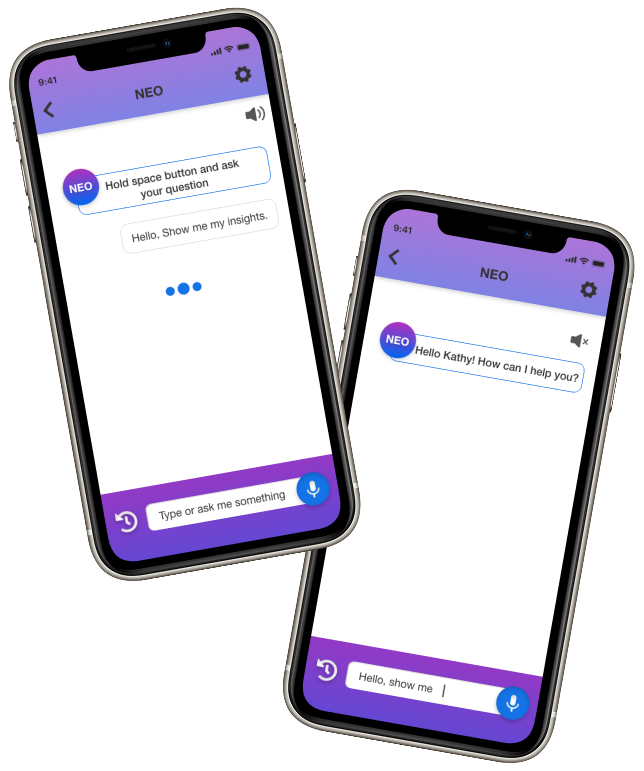
The research findings were translated into an interactive CVA prototype developed in Adobe XD. This artefact effectively demonstrates the practical application of the user-centred design framework by visually communicating key customisation and personalisation features as well as multimodal user interaction flows. Adobe XD was chosen for its strong support of voice interactions, which aligns closely with the core focus of the project
Customisable settings
Tailor how your assistant looks, sounds and behaves to match your preferences and your financial routine
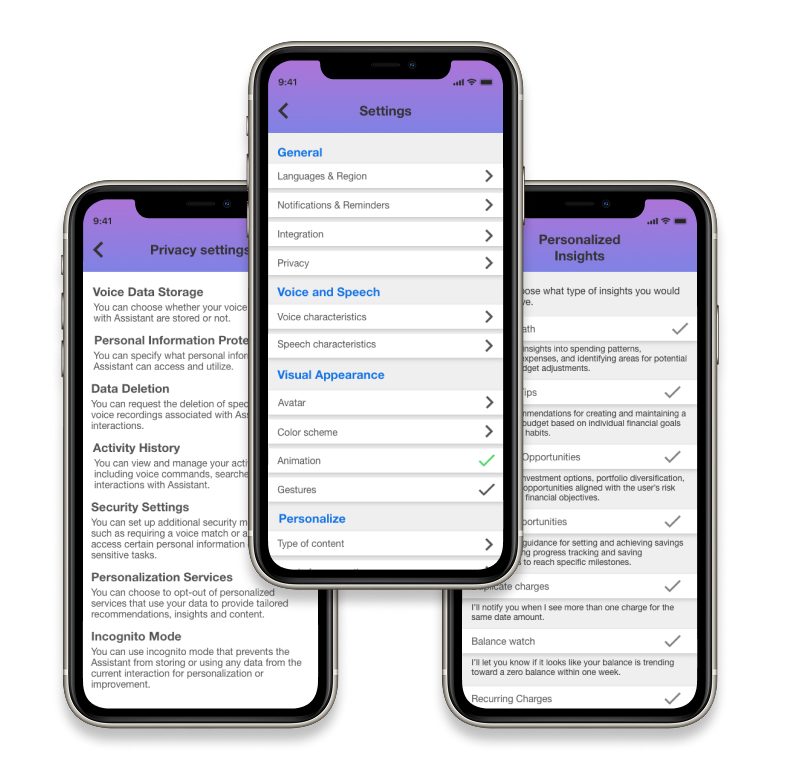
Visual customizations
Match the assistant’s look to your personal style. Swap themes, switch between light and dark modes, and select custom avatars
Voice settings
Find the perfect tone and rhythm for your audio interactions. Choose from diverse regional accents.
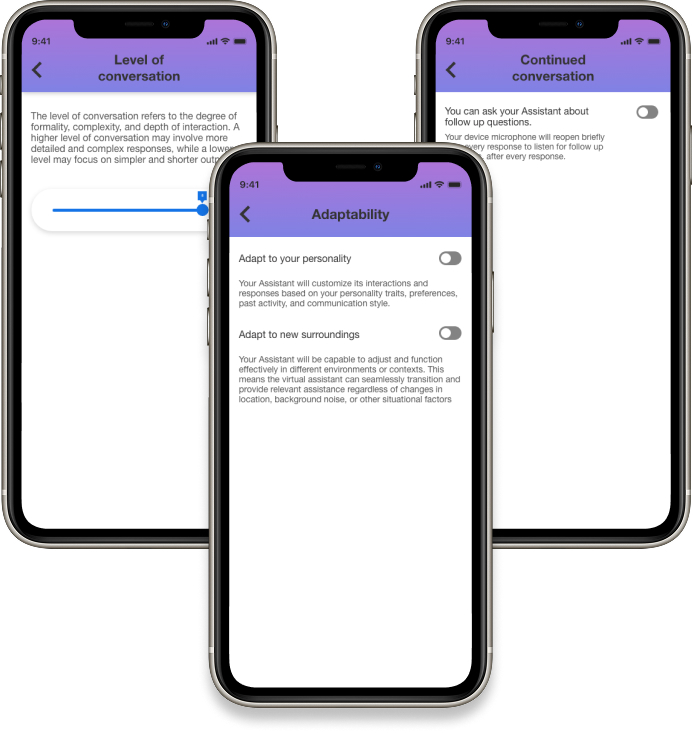
Personalised experience
Enjoy a banking app that learns from your financial habits. Receive smart budgeting insights, predictive bill reminders, and tailored investment suggestions based on your spending.
Multimodal conversations
Engage with your finances naturally by combining touch, voice, and visuals. Speak your commands while reviewing graphs, upload photos of bills to pay them instantly, and receive real-time, interactive responses tailored to your immediate context
Conversational Agent
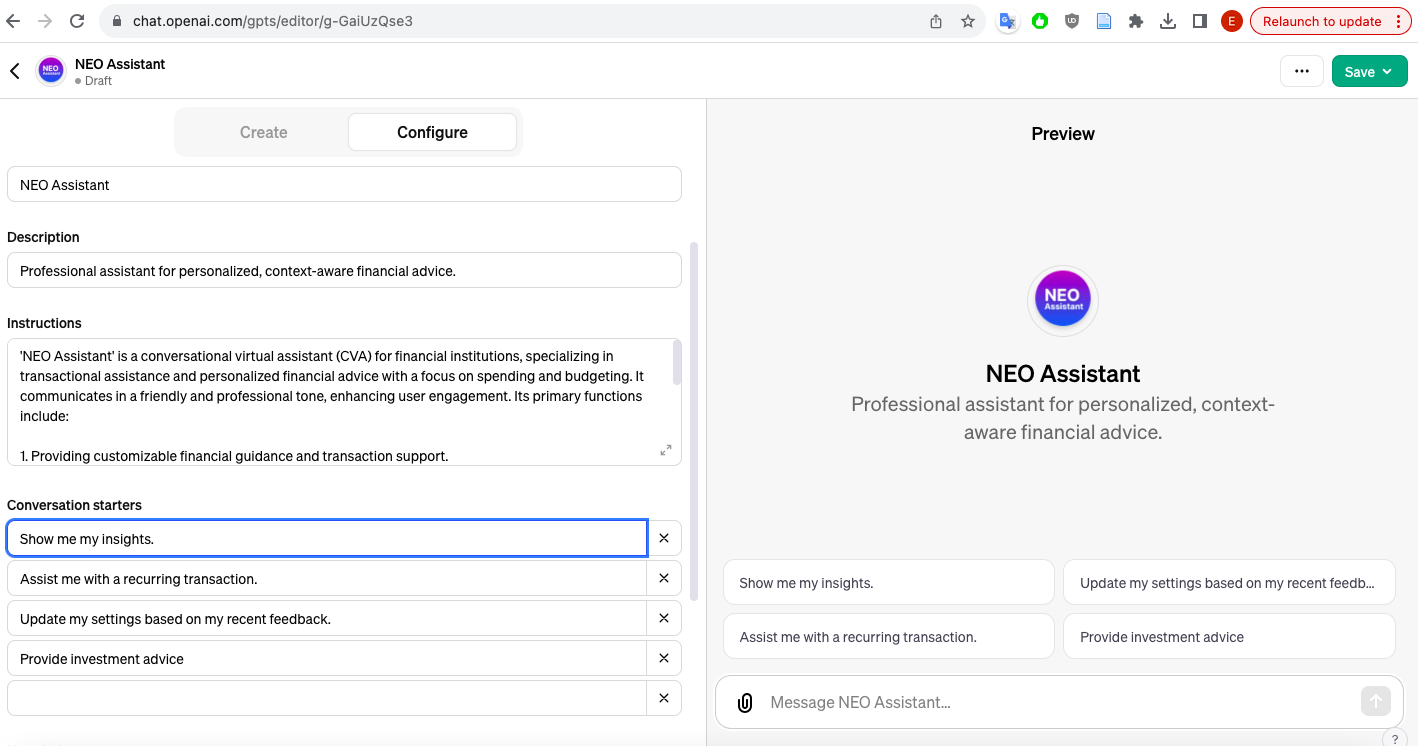
OpenAI GPT Agent Platform was used to demonstrate how the proposed design framework can be leveraged in practice to create a real-world CVA that could be integrated into the mobile banking app
Future Work
Future work should focus on conducting a usability study of the proposed prototype to identify and address potential usability or design issues. Further development is necessary to create additional interactions and user flows, as well as fully integrate this CVA into the mobile banking app. Also, the findings of this study should be validated in future research by engaging a broader population and increasing the sample size of participants.
Final Thoughts
The impact of this project extends beyond academic achievement, contributing to HCI literature, particularly in the realm of CVA design for mobile banking. The artefact developed as a solution to the uncovered problem demonstrates practical implications of the research findings, potentially influencing future UX design practices in the financial technology sector. The proposed framework serves as a valuable resource for designers and developers, guiding them in implementing customization and personalization settings into CVA interface design.
This project helped me gain invaluable insights and skills that significantly contributed to my professional and academic growth in the field of UX design. Through a successful experience that combined academic inquiry with practical application, focusing on the user-centred design of CVAs in mobile banking, I was able not only to enhance my understanding of the user-centred design approach but also to develop my skills in independent research and academic writing.